5 hr
Fajardo Bioluminescent Bay Night Kayaking Tour
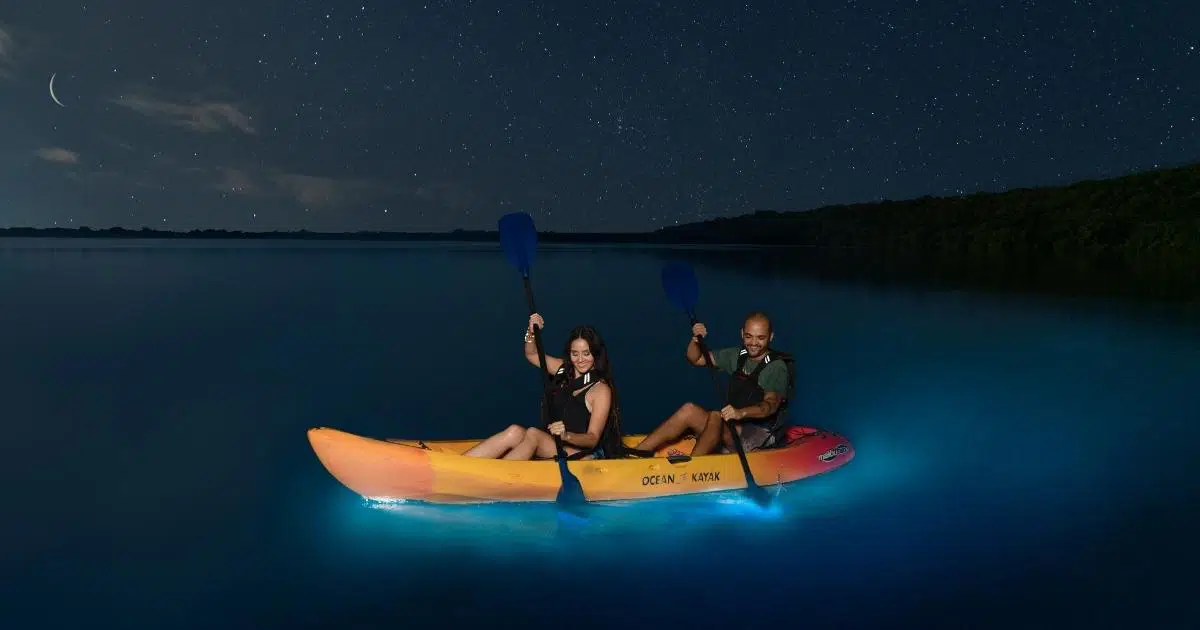
Paddle by night through mangrove tunnels into Laguna Grande's glowing bioluminescent waters.
Reserve
Mangroves close overhead, the water answers every paddle.
Hand-picked by our editors — only the best 9 experiences from 214 reviewed.
Verified partners for Bioluminescent Bay Tour From San Juan tours, free cancellation where available, and instant confirmation on every booking.
5 hr
Paddle by night through mangrove tunnels into Laguna Grande's glowing bioluminescent waters.
Reserve
5 hr
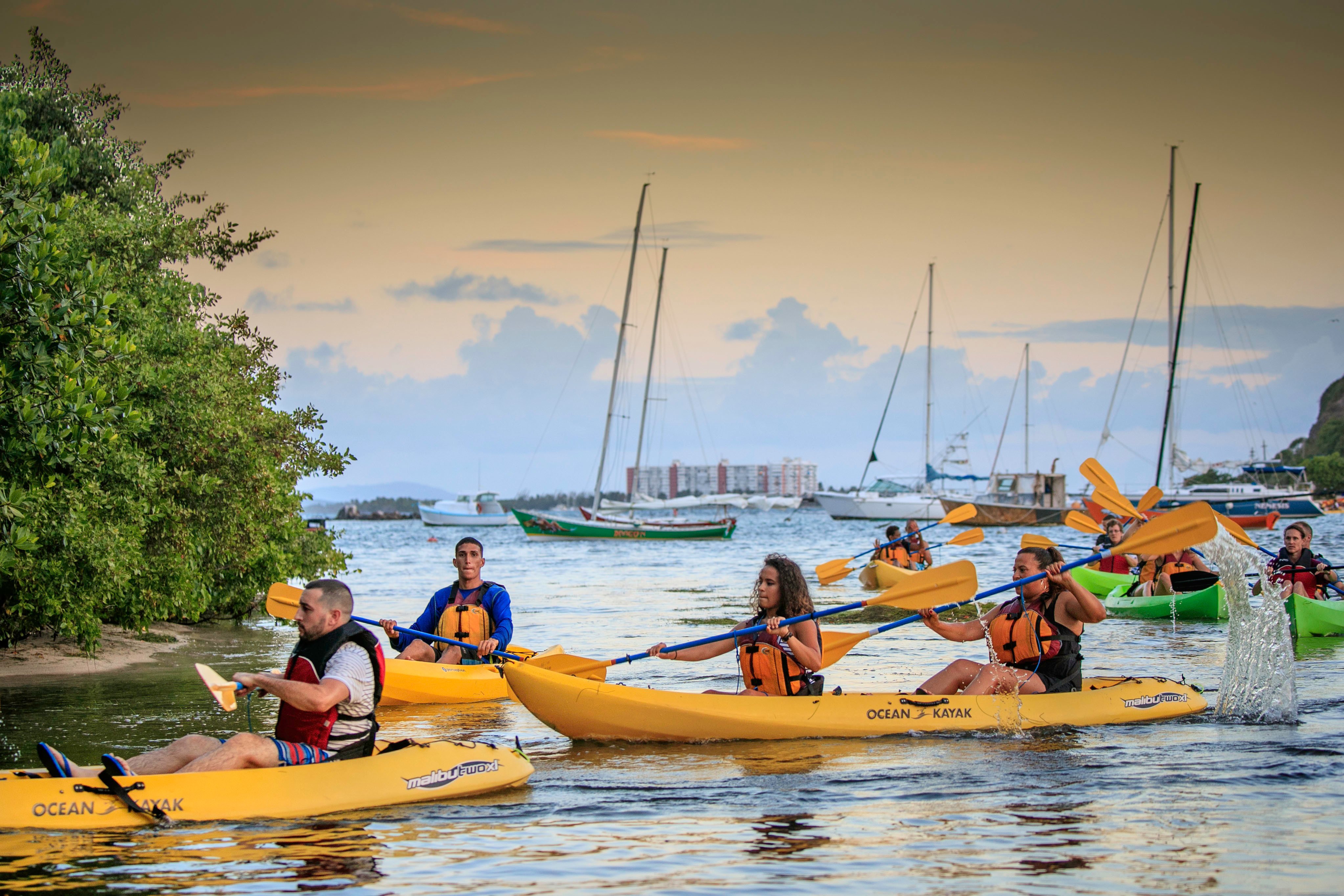
Kayak by night through mangrove channels to a glowing bioluminescent lagoon near San Juan.
Reserve
3 hr
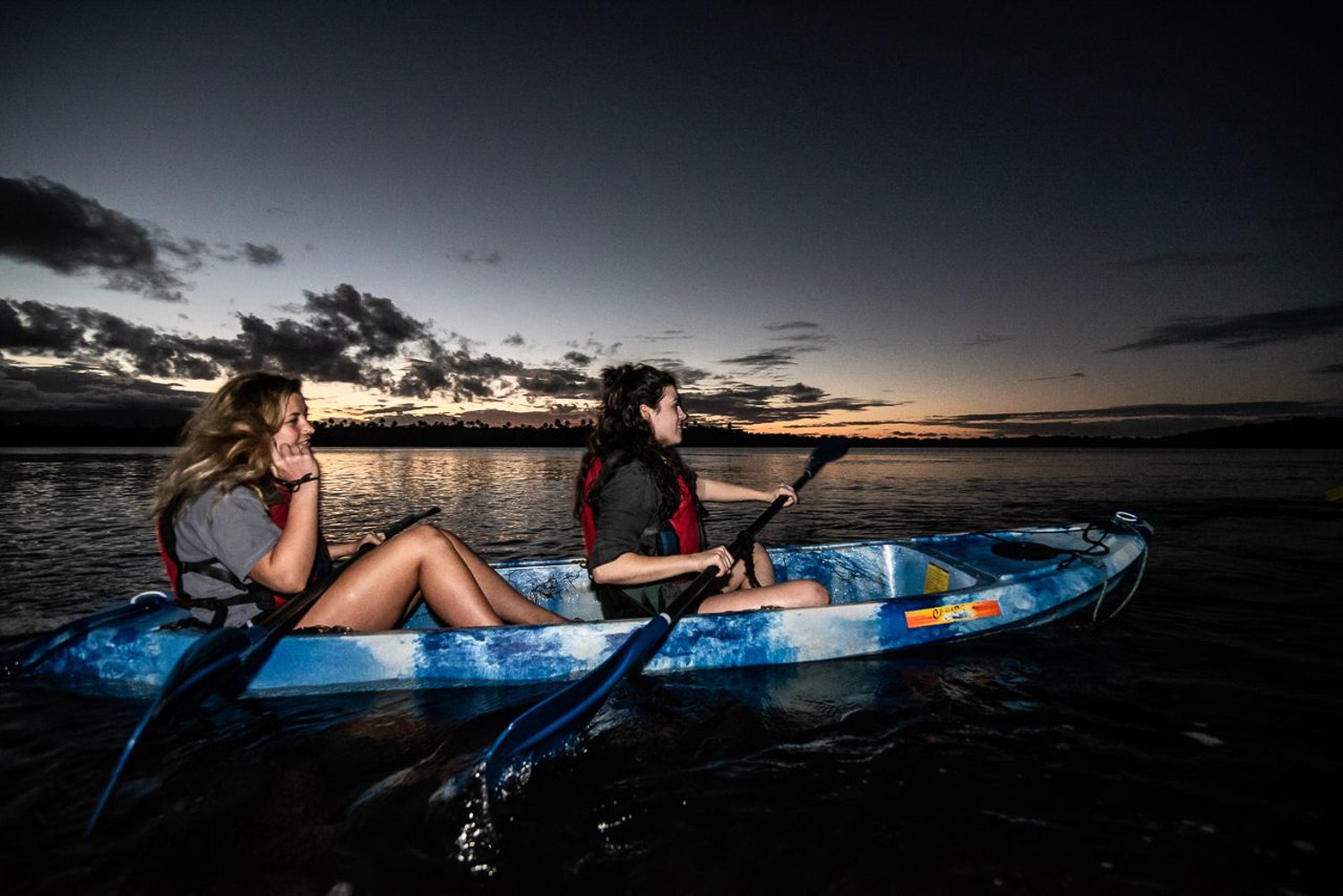
Paddle mangrove tunnels to Laguna Grande and watch the water glow under the night sky.
ReservePrices from verified partners. Availability updates in real time at checkout. Free cancellation policies apply where shown.
The landmarks, rooms, and views travelers on Bioluminescent Bay Tour From San Juan tours remember — all visible on a single visit.
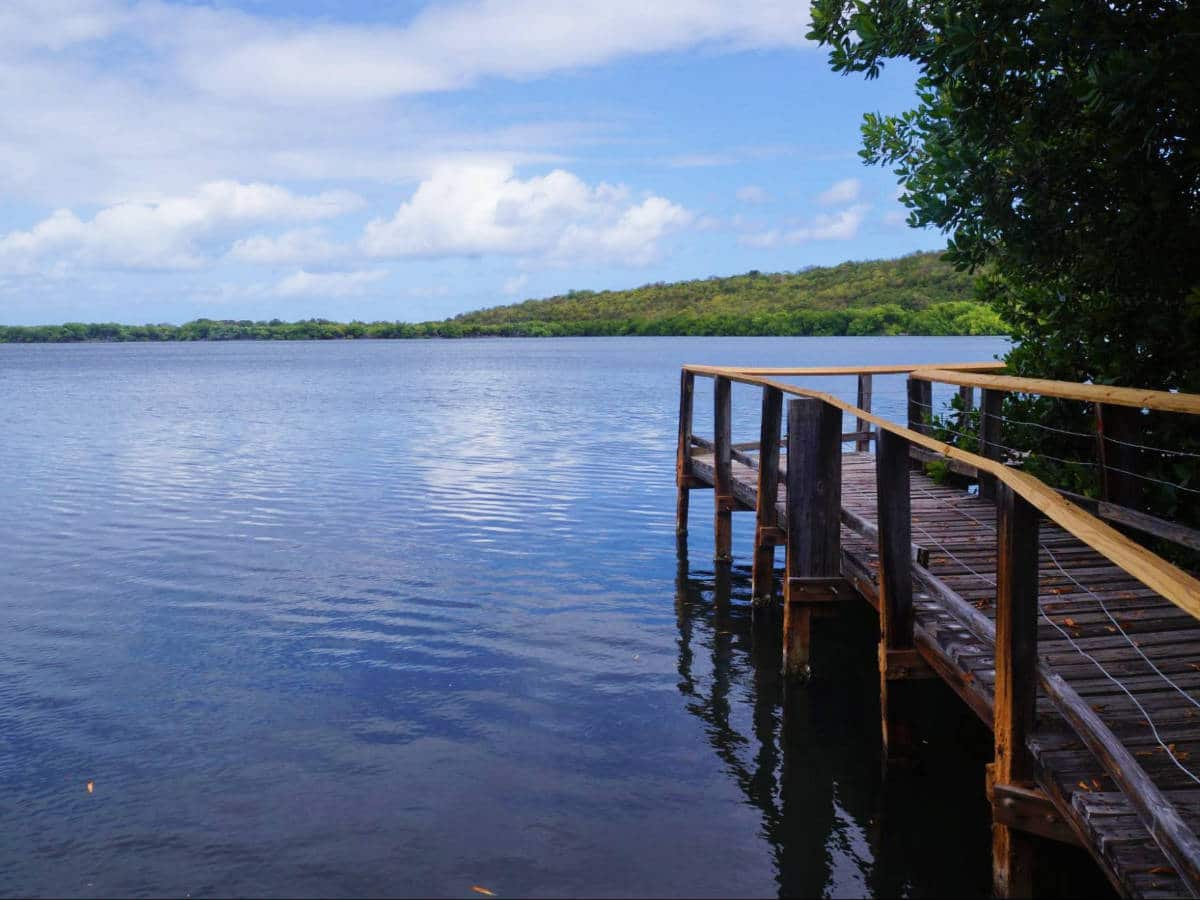
This is the most direct land route toward the glowing lagoon and one of the defining features of Laguna Grande. The boardwalk threads through mangroves, a habitat that helps shelter the channel from excess light and wind. The path is short, but the ecosystem around it is dense and layered, making it useful for both ecology and night-viewing context.
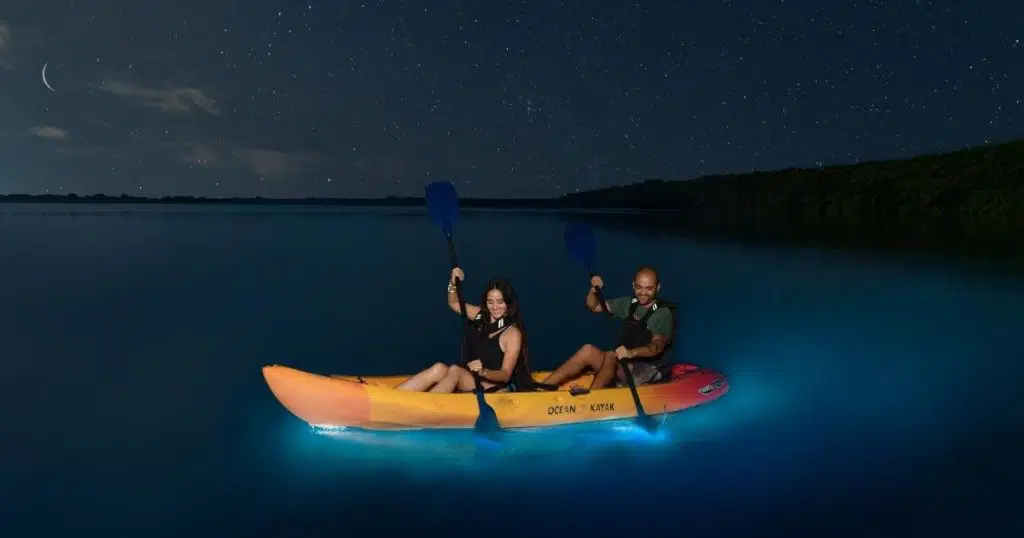
The lagoon channel is where kayaks or guided walking routes approach the water with the least disturbance. Laguna Grande is one of only a few bioluminescent bays in Puerto Rico, and the glow varies with moon phase, cloud cover, and water conditions. The small organisms responsible for the light are dinoflagellates, which flash when the water is agitated.
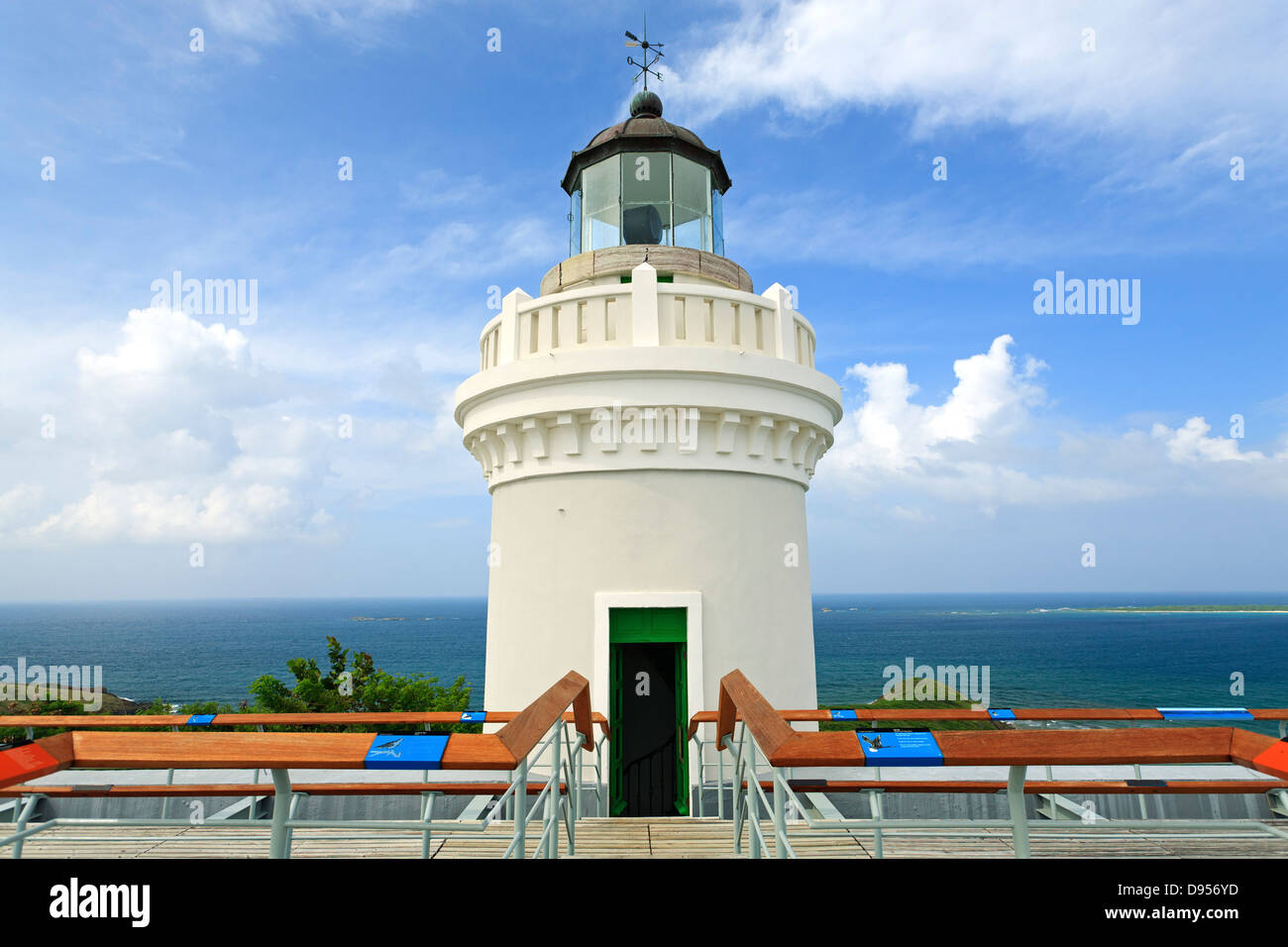
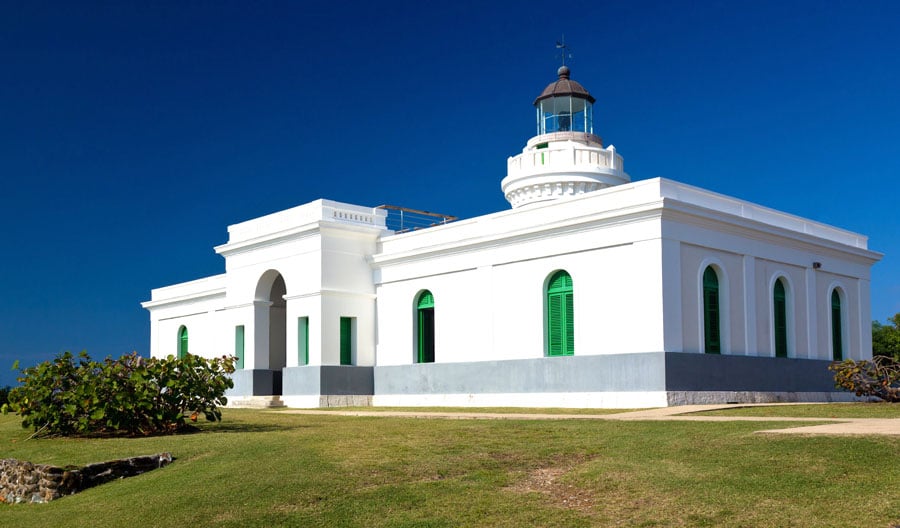
The lighthouse is a key interpretive stop for understanding the reserve’s light-pollution story. From this vantage point, guides explain how nearby illumination affects the bay and the surrounding habitat. It is a practical landmark as well as a visual reference point on the peninsula.
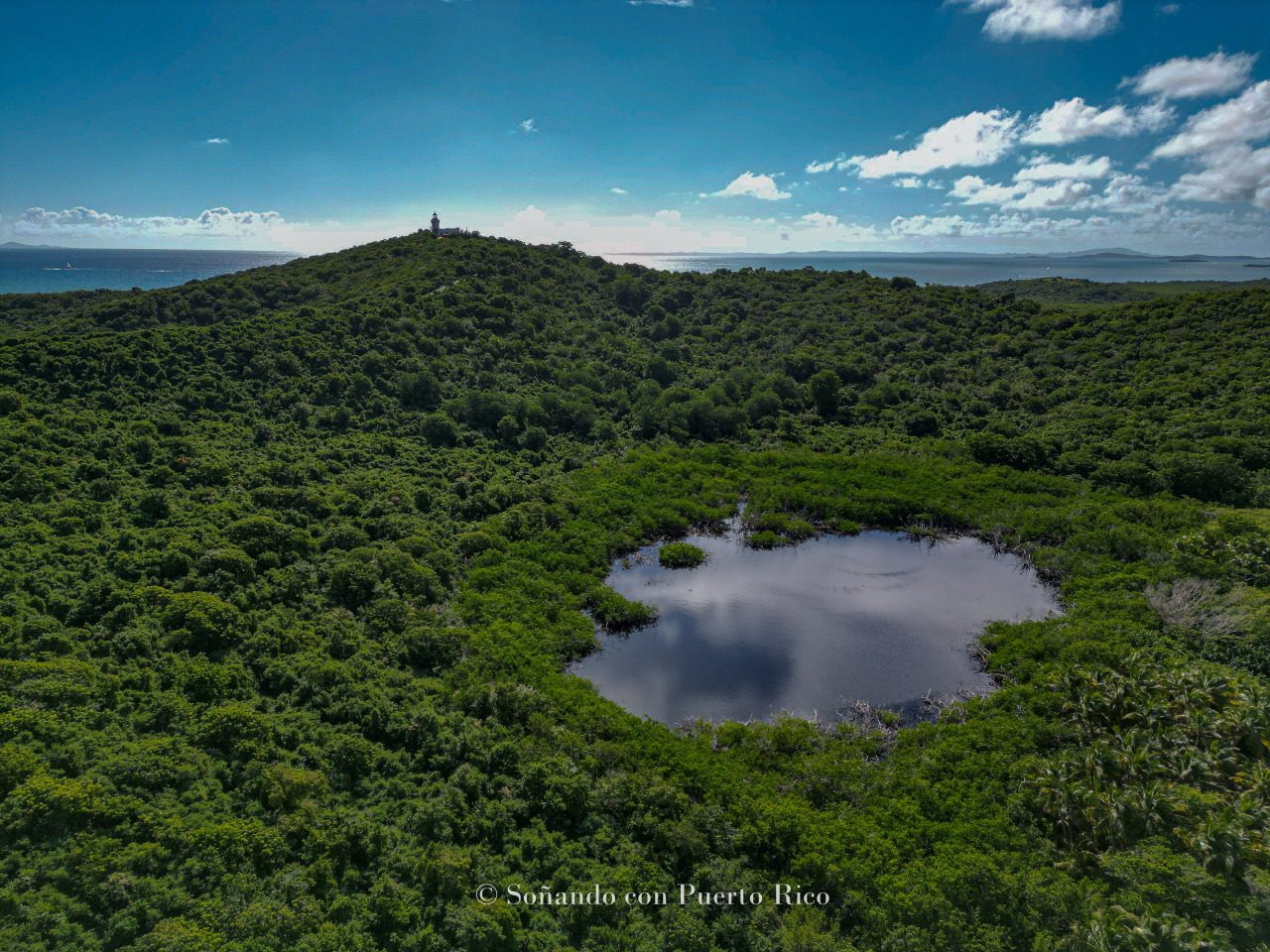
These wetlands sit within the broader reserve mosaic of mangroves, shoreline, and coastal vegetation. They help filter runoff and support wildlife, which is why the reserve pairs natural-history interpretation with the bioluminescent visit. The landscape is not just scenic; it is part of the bay’s ecological buffer.
The reserve includes reef and nearshore marine habitat beyond the lagoon itself. That matters because the bay’s health is tied to the wider coastal system, not only the glowing water. Guides often connect reef ecology with water quality and the visibility of bioluminescence.
Las Croabas is the gateway area to the reserve and a recognizable starting point for many visits. The mangrove forest here acts like a living corridor, channeling visitors toward the lagoon while protecting the coast from wave energy. It is one of the clearest examples of how the reserve blends access and conservation.
Every Bioluminescent Bay Tour From San Juan tour side-by-side — duration, what's included, how you redeem.
| Experience | Duration | Rating | Pickup | Guide | Small group | Free cancel. | Price | |
|---|---|---|---|---|---|---|---|---|
|
Standard Entry Most popular
Fajardo Bioluminescent Bay Night Kayaking Tour
|
5 hr | ★ 4.4 | ✓ | ✓ | ✓ | ✓ | €108 | Book → |
|
Standard Entry
San Juan: Nighttime Bioluminescent Bay Kayak Tour
|
5 hr | ★ 4.1 | ✓ | — | — | ✓ | €95 | Book → |
|
Standard Entry
Fajardo Bioluminescent Lagoon Kayak Tour
|
3 hr | ★ 4.6 | — | — | ✓ | ✓ | €74 | Book → |
All prices from verified partners. Availability and exact terms confirmed at checkout.
They complement each other, but most San Juan-based visitors pick Laguna Grande for the easier day-trip logistics and Vieques Mosquito Bay for the brighter, more remote experience. If you want the simpler bioluminescent bay tour from san juan, Laguna Grande wins; if you want the stronger glow and can add the extra travel, Vieques is the more thrilling choice.
| Feature | Top pick Laguna Grande | Vieques Mosquito Bay |
|---|---|---|
Access from San Juan |
About 1 hour drive | Ferry or flight, longer route |
Need for overnight stay |
No overnight needed | Overnight required |
Glow intensity |
Very bright, but dimmer | Brightest bioluminescent bay |
Tour format |
Guided kayak or boat | Guided kayak, clear-bottom |
Total trip time |
About 2–3 hours | Most of a full day |
Best fit for |
San Juan base, easy evening | Glow chasers, Vieques stay |
| See tickets → |
Verdict: Choose Laguna Grande for a practical one-evening glow trip from San Juan, or Vieques Mosquito Bay if you can commit to the longer island detour and want the stronger natural light show.
Choose your ticket, select your date, and reserve in under two minutes. Secure checkout handled by our verified partner.
Instant confirmation by email, with a mobile voucher you can save offline. No printing, no queuing at a collection desk.
Arrive at the entrance, show your voucher on your phone, and walk in. Most tickets include priority or skip-the-line access.
Practical details for Bioluminescent Bay Tour From San Juan tickets straight from our verified partners — hours, access, rules, and how to get there.
Wear closed-toe walking shoes and lightweight clothing that can handle humidity, boardwalks, and a short mangrove approach. The reserve’s guided routes can involve uneven surfaces, so avoid sandals unless you are only doing a non-walking portion of the visit.
Expect a guided natural-area visit rather than a large attraction with bag screening. Keep everything compact so you can move easily on the boardwalk, and bring only what you can carry without blocking the group.
Photography is allowed, but the glowing water is easiest to capture with minimal light pollution and no flash. For a bioluminescent bay tour from san juan, use a steady hand or high-ISO settings because the effect changes with moon phase and ambient light.
The official reserve describes the activity as easy to moderate depending on the route, with some experiences using a trolley and boardwalk. That said, parts of the mangrove and shoreline approach are not fully accessible, so mobility-sensitive visitors should confirm the exact tour format before booking.
Keep your phone on dim or airplane mode during the darkest parts of the visit to preserve night vision and reduce light spill. A bright screen can make the bioluminescence harder to see for your group.
The reserve states that all minors under 18 must be accompanied by an adult. For a family on a bioluminescent bay tour from san juan, the easiest option is usually the interpretive boardwalk-style visit rather than a strenuous kayak route.
Bring a reusable bottle and a small snack if you need one, but keep food contained and respect the natural reserve setting. Eating is best done before arrival, since the visit is centered on the mangrove channel, lagoon, and interpretive walk.
Do not plan to bring pets unless the official reservation page for your exact tour explicitly allows them. Because this is a protected reserve with boardwalks, guided routes, and wildlife concerns, animal access is typically restricted.
A bioluminescent bay tour from san juan usually combines a drive to Fajardo with a reserved time slot at the reserve, so arrive with time to park and check in. The official page recommends arriving 30 minutes before your reservation, and the route may use PR-9987 as the alternate access road.
Best time to go, insider tips, nearby landmarks, and the cancellation fine print — flip through to skim what matters to you.
Flexible, no hidden fees.
The official reservation page shows a 12 USD regular adult price, but it does not publish a standardized cancellation refund window on the page reviewed. Because ticketing is handled through the official reservation system, check the booking terms shown at checkout before paying.
A single litre of Laguna Grande water can hold more than 700,000 dinoflagellates, each one no wider than a human hair. The organism responsible is Pyrodinium bahamense, a single-celled plankton that converts mechanical disturbance into a flash of blue light lasting roughly a tenth of a second.
Puerto Rico holds three such lagoons. Only Laguna Grande, on the island's northeast shoulder at Las Croabas, is reached by a natural channel cut through red mangrove — which is why the fajardo bioluminescent bay tour from san juan has become the most accessible of the three.
The lagoon sits inside the Cabezas de San Juan reserve, land assembled by Puerto Rican conservationists in the late 1970s and opened to the public in 1991 under Para la Naturaleza. Seven ecosystems meet within a few hundred acres: dry forest, coral reef, seagrass, sandy beach, lagoon, mangrove and cliff. The 1882 Spanish lighthouse above the headland, El Faro, still stands as one of the oldest on the island. Fees fund the trust directly; the 12 USD adult conservation fee is not a gate price but a stake in the reserve's upkeep.
Why the lagoon matters is chemical as much as scenic. Bioluminescence here depends on a narrow salinity band, on tannins leached from mangrove roots, and on darkness. Streetlight spill, boat fuel and sunscreen residue all degrade the reaction. Vieques suffered years of decline before recovering; visitors weighing a vieques bioluminescent bay tour from san juan against Fajardo often choose the latter for the shorter drive from the capital and the protected channel. A bioluminescent bay trip from san juan covers roughly 50 kilometres along Route 3 and PR-987 to Carr. 987 km 5.9.
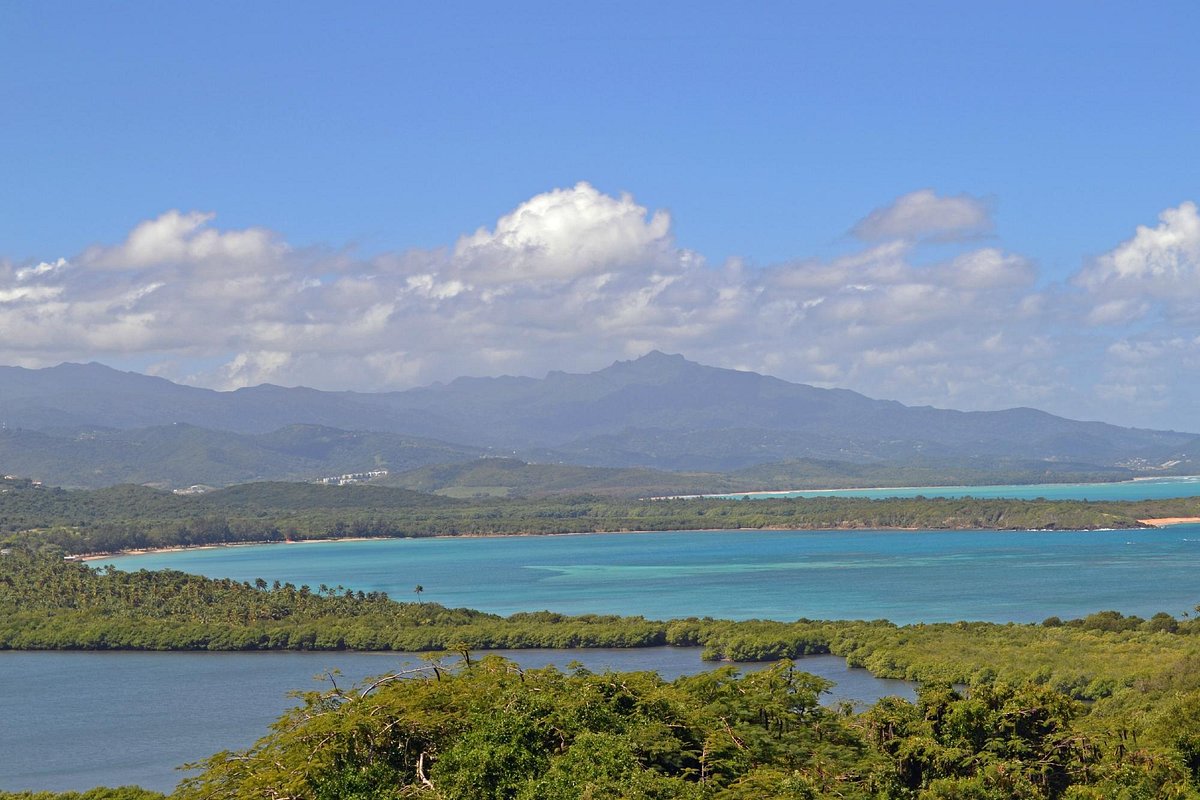
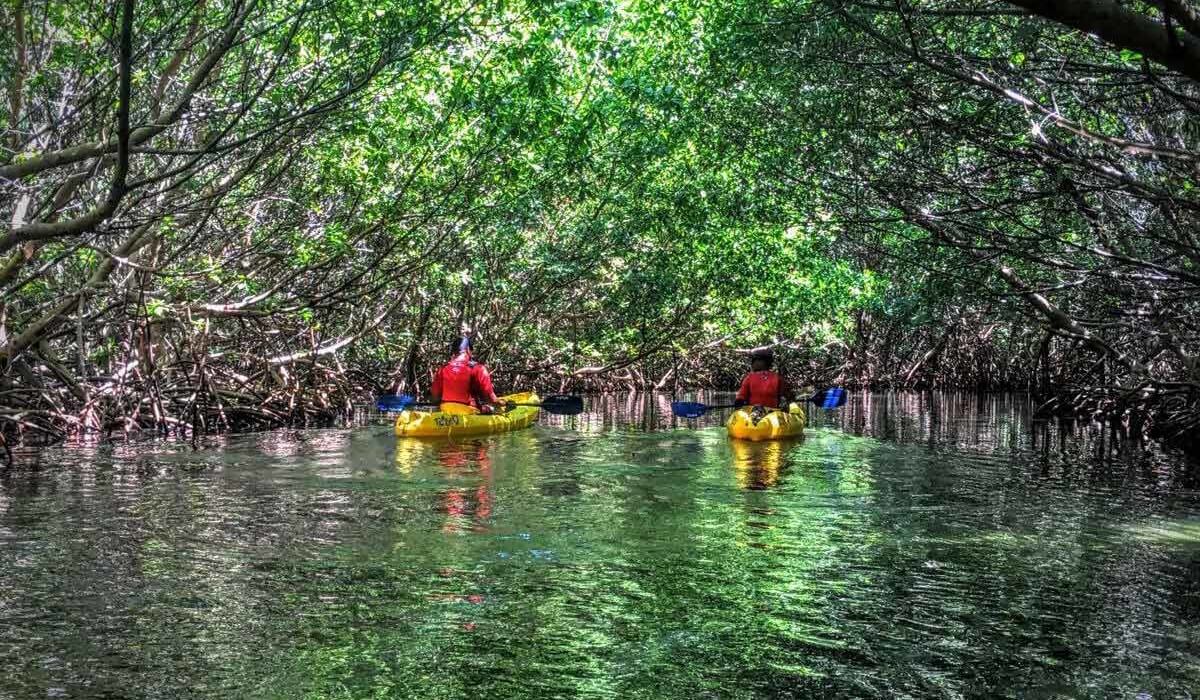
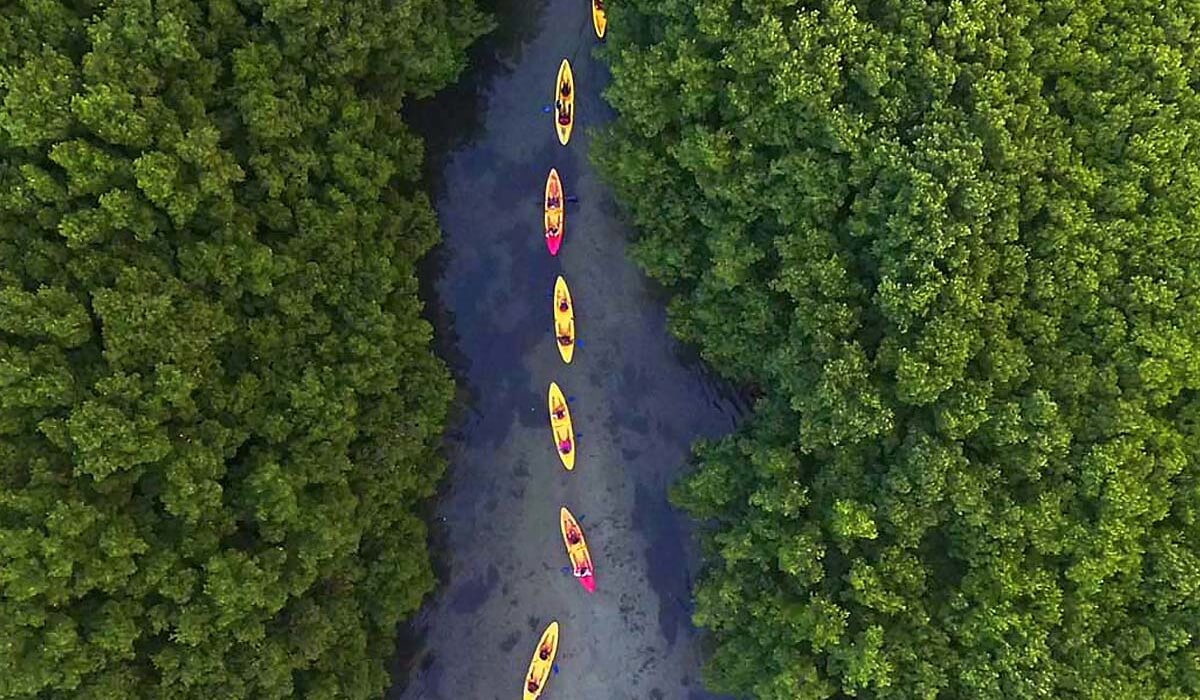
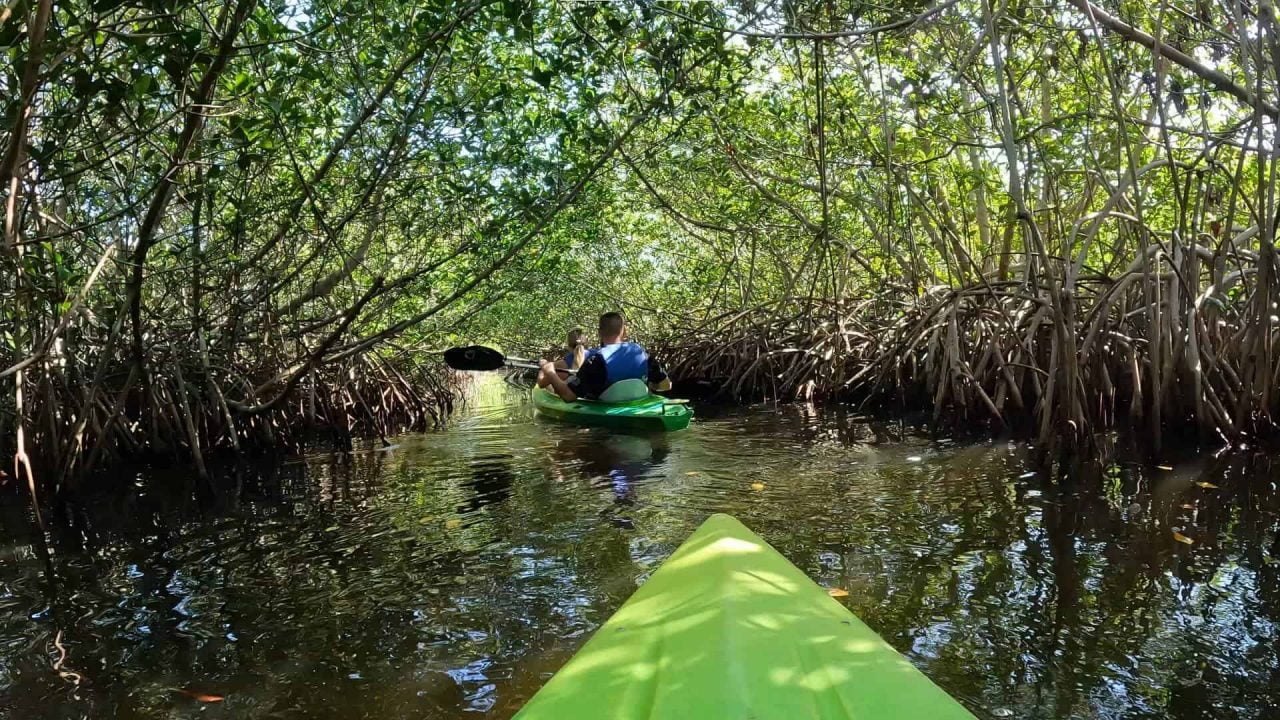
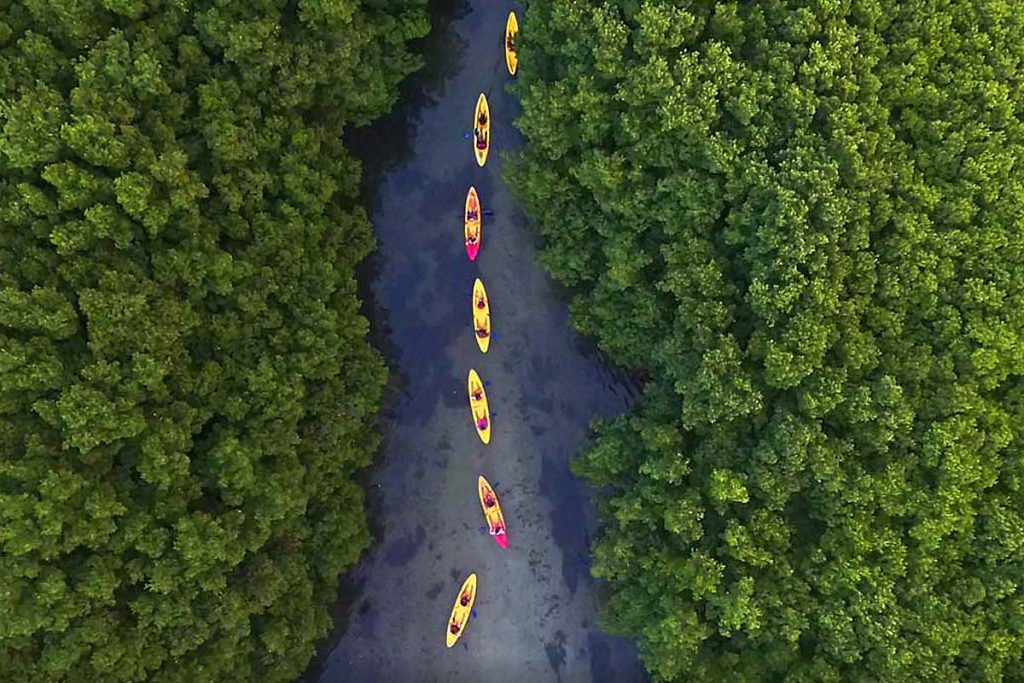
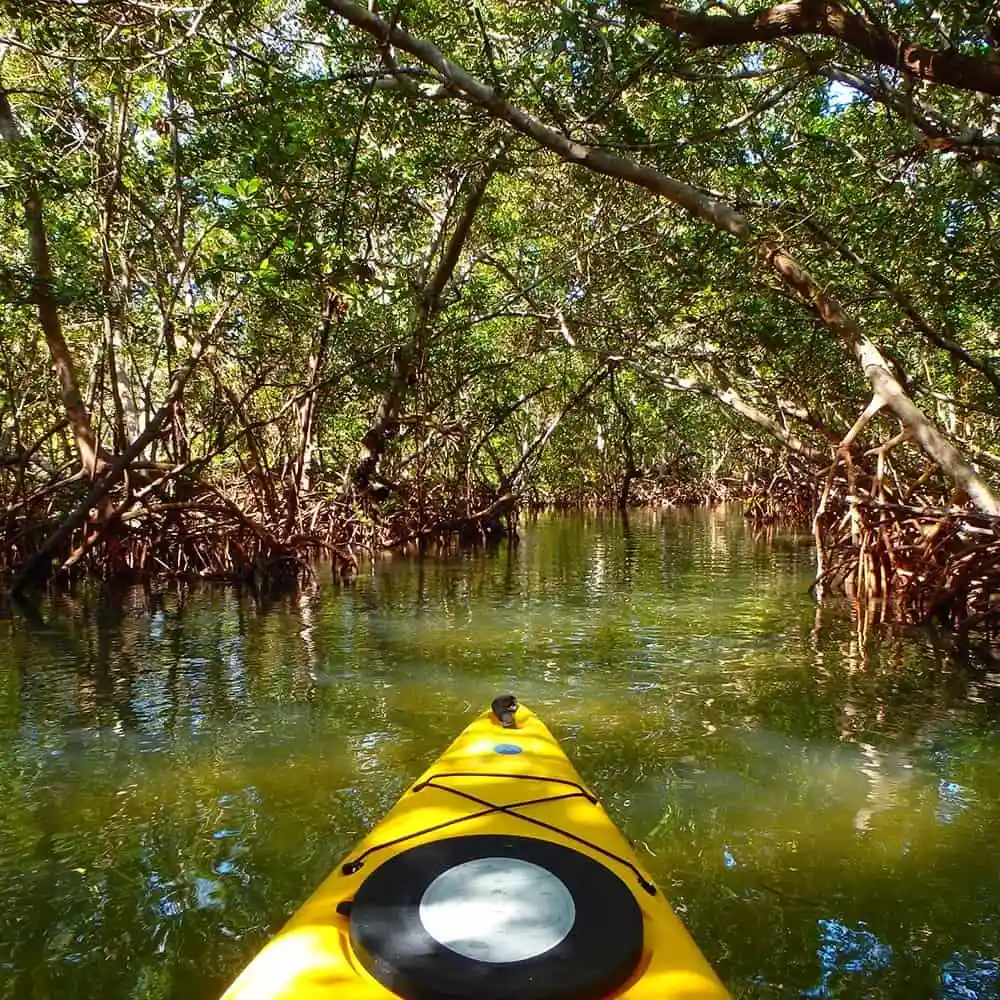
The mangrove channel itself is the reserve's defining architecture — a corridor barely four metres wide in places, roofed by Rhizophora mangle whose stilt roots filter sediment and trap the nutrients the plankton feed on. Guides paddle it in single file. Beyond the channel the lagoon opens to about half a square kilometre of shallow, warm, near-enclosed water.
Historically, Las Croabas was a fishing village whose crews knew the glow long before the science described it. Spanish colonial accounts treated it with suspicion. Today the science is settled and the reserve is a case study in island conservation. Booking a bioluminescent bay tour from san juan means entering a working laboratory, not a spectacle — one of the few places where a Caribbean landmark is measured in cell counts as often as in visitor numbers.

"Bioluminescence here is not scenery but chemistry — salinity, tannins and darkness, held in balance."
A step-by-step walkthrough of Bioluminescent Bay Tour From San Juan tickets — what you'll see, how long each stage takes, and the details that matter.
You leave the capital in daylight and reach Carr. 987 km 5.9 in Las Croabas, where the reserve gate opens at 09:00 and closes at 17:30, Thursday through Sunday. Arriving between 09:00 and 11:00 puts you ahead of the crowd and gives you daylight to orient yourself.
You pay the 12 USD conservation fee, sign the reserve waiver, and step onto the boardwalk above the dry forest.
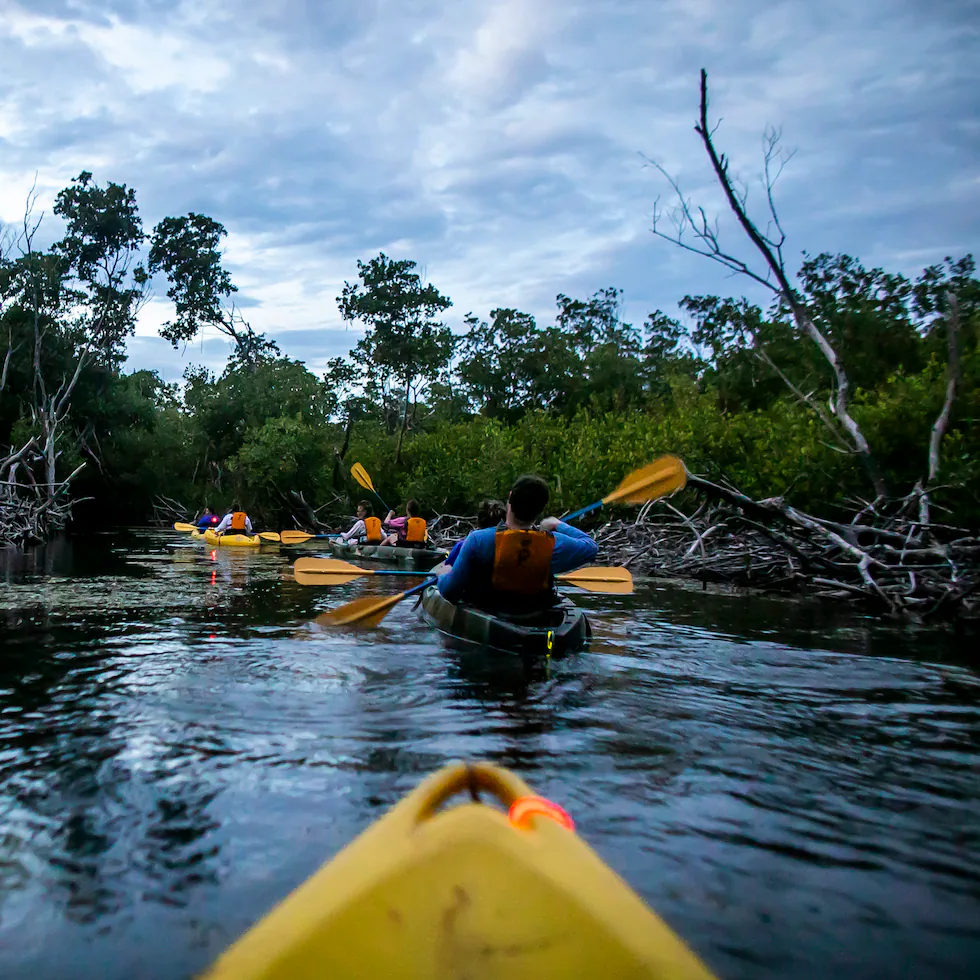
You walk to the launch beach at the lagoon's mouth. A guide fits your life vest, hands you a double-bladed paddle, and runs through the stroke: short, controlled, close to the hull. You slide the kayak into the shallows and follow the line into the mangrove channel. The corridor narrows. Roots brush the gunwale. You duck twice, three times, and count perhaps eight minutes of paddling before the canopy breaks.
The lagoon opens flat and warm. You stop paddling, let the kayak drift, and drag one hand through the water. On a fajardo bio bay tour from san juan this is the moment the trip turns on — the wake behind your blade lighting cold blue, fish leaving bright seams beneath the surface.
You raft up with the group, listen to the guide name the dinoflagellate, then turn back through the channel. You land on the same beach, hand back the vest, and drive the coast road out past El Faro lighthouse.
The official reserve hours are Thursday through Sunday from 09:00 to 17:30, and it is closed Monday through Wednesday. For a bioluminescent bay tour from san juan, plan around those hours and book only within the listed operating days.
The regular adult admission is 12 USD. If you are comparing bioluminescent bay tour from san juan tickets, use that figure as the official baseline and check the reservation page for any tour-specific add-ons.
The official recommendation is to arrive between 09:00 and 11:00, and the reservation page also asks visitors to arrive 30 minutes before their scheduled time. For a bioluminescent bay tour from san juan, that means you should not plan to show up after opening and hope to walk straight in.
Accessibility varies by tour format. Some Laguna Grande experiences use a trolley and a boardwalk, but the route still passes through a protected natural area, so visitors with limited mobility should confirm the exact program before booking a bioluminescent bay tour from san juan.
Carry only a small bag and keep valuables to a minimum. The reserve is a guided natural site with boardwalks and narrow access points, so a light pack is easier to manage on a bioluminescent bay tour from san juan.
Low-light photography is possible, but flash and bright screens can reduce the visibility of the glow. For a bioluminescent bay tour from san juan, use night settings and keep your phone dim during the darkest parts of the route.
Closed-toe shoes are the safest choice, and lightweight clothing works best in the humid coastal climate. Because parts of the visit involve mangroves and boardwalks, avoid footwear that slips easily on wet surfaces.
Bring water, but keep drinks contained and avoid messy food on the trail and boardwalk. The official reserve materials emphasize a reusable bottle, which fits the low-impact setup of a bioluminescent bay tour from san juan.
Yes, the reserve says all minors under 18 must be accompanied by an adult. For families taking a bioluminescent bay tour from san juan, the calmer interpretive formats are usually easier than more physical night paddles.
The official page reviewed does not publish a separate refund window, so the safest approach is to rely on the terms shown at checkout. For bioluminescent bay tour from san juan tours, confirm the cancellation rule before paying because policies can vary by operator and date.